
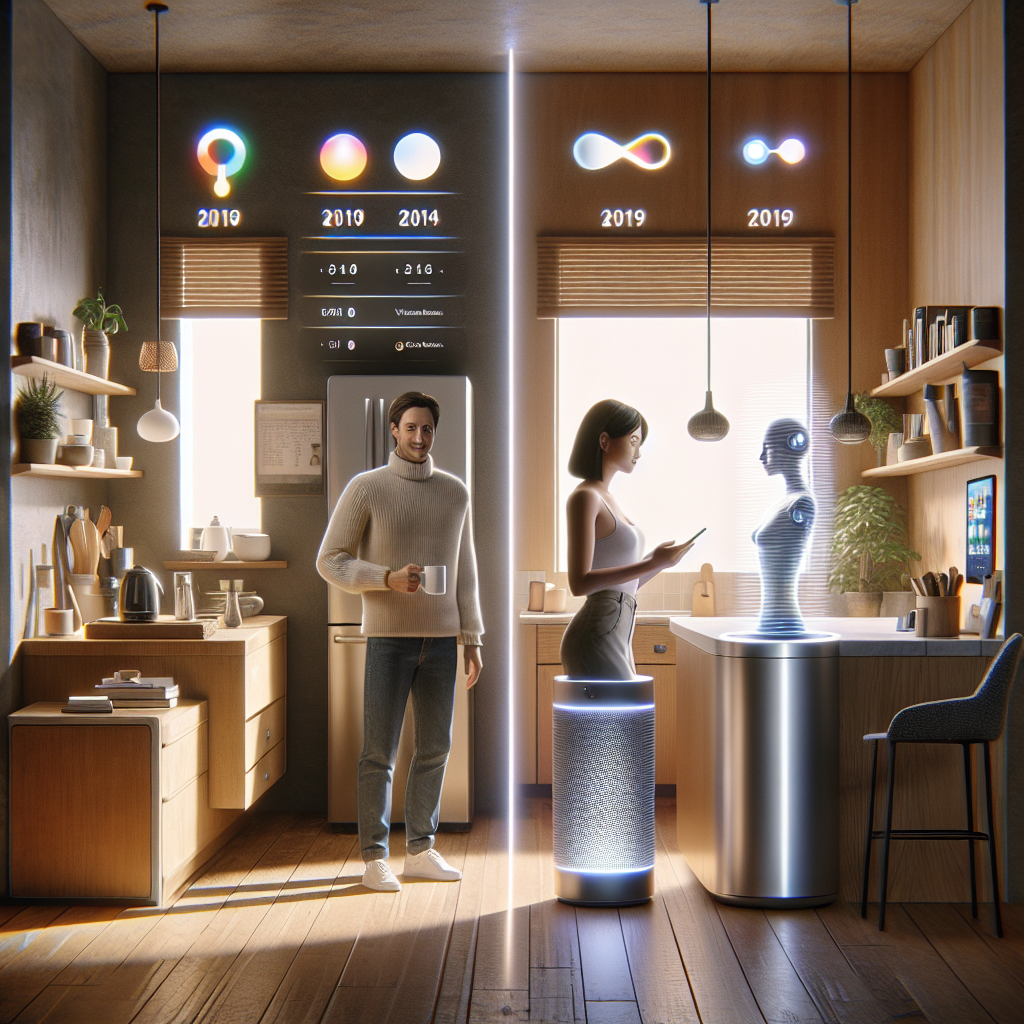
## The Evolution of Virtual Assistants: From Siri to Supercharged AI
The world of virtual assistants has undergone a transformative journey, evolving from simple chatbots to sophisticated AI-powered systems that have revolutionized the way we interact with technology. This evolution is not just about advancements in software; it reflects our relentless pursuit of more intuitive and personalized user experiences.
### Early Beginnings: The Pioneers
It all started in the 1960s with **ELIZA**, developed by Joseph Weizenbaum, which could simulate a conversation by recognizing patterns and generating responses. Although limited, ELIZA laid the groundwork for future innovations. In the 1970s, **PARRY** was introduced, designed to mimic a person with paranoid schizophrenia, showcasing a more natural interaction with users[1][3].
### The Rise of Voice Assistants
The modern era of virtual assistants really took off with **Siri**, introduced in 2011 by Apple. Siri’s ability to understand voice commands marked a significant shift towards more natural interaction. This was followed by **Alexa** from Amazon and **Google Assistant**, each bringing their unique features and capabilities to the table[7][8].
### From Simple to Supercharged: The AI Leap
Over the past decade, virtual assistants have become **AI-powered**, capable of learning from user interactions and adapting their responses. Advancements in **Natural Language Processing (NLP)** have enabled these assistants to better understand context, emotional tones, and multilingual inputs, making them more inclusive and personalized[6][8].
### Future Directions: Integration and Autonomy
Looking forward, virtual assistants are set to integrate with cutting-edge technologies like **Internet of Things (IoT)** devices and **Augmented Reality (AR)**. This integration will enhance user experiences, allowing for more immersive and autonomous interactions. For instance, virtual assistants in AR environments could revolutionize fields such as education and e-commerce[6].
### Impact and Opportunities
The impact of virtual assistants extends beyond personal convenience; they are transforming industries by automating tasks, enhancing customer service, and improving productivity. As these assistants continue to evolve into more intelligent and autonomous systems, they will play a crucial role in shaping the future of technology and human interaction.
In this journey from Siri to supercharged AI, we are witnessing not just technological advancements but a new era where machines are becoming ever more intuitive and responsive to human needs. This evolution is a testament to innovation and our relentless pursuit of a more streamlined andassistant
simplified interaction with technology. As we look ahead, one thing is clear: the future of virtual assistants is not just about them becoming smarter, but about how they will redefine the boundaries of what we thought was possible.